
Audit the week before rearranging it
Look at the previous two weeks and estimate how much time went to meetings, focused work, administration and unplanned requests. Memory tends to underestimate small interruptions, so use the calendar and completed work as evidence.
Identify your real working window
Your available day is smaller than the time between signing in and signing off. Remove lunch, recurring meetings, school pickup, commuting and necessary breaks. The remaining hours are the capacity you can intentionally assign.
Protect focus before the calendar fills
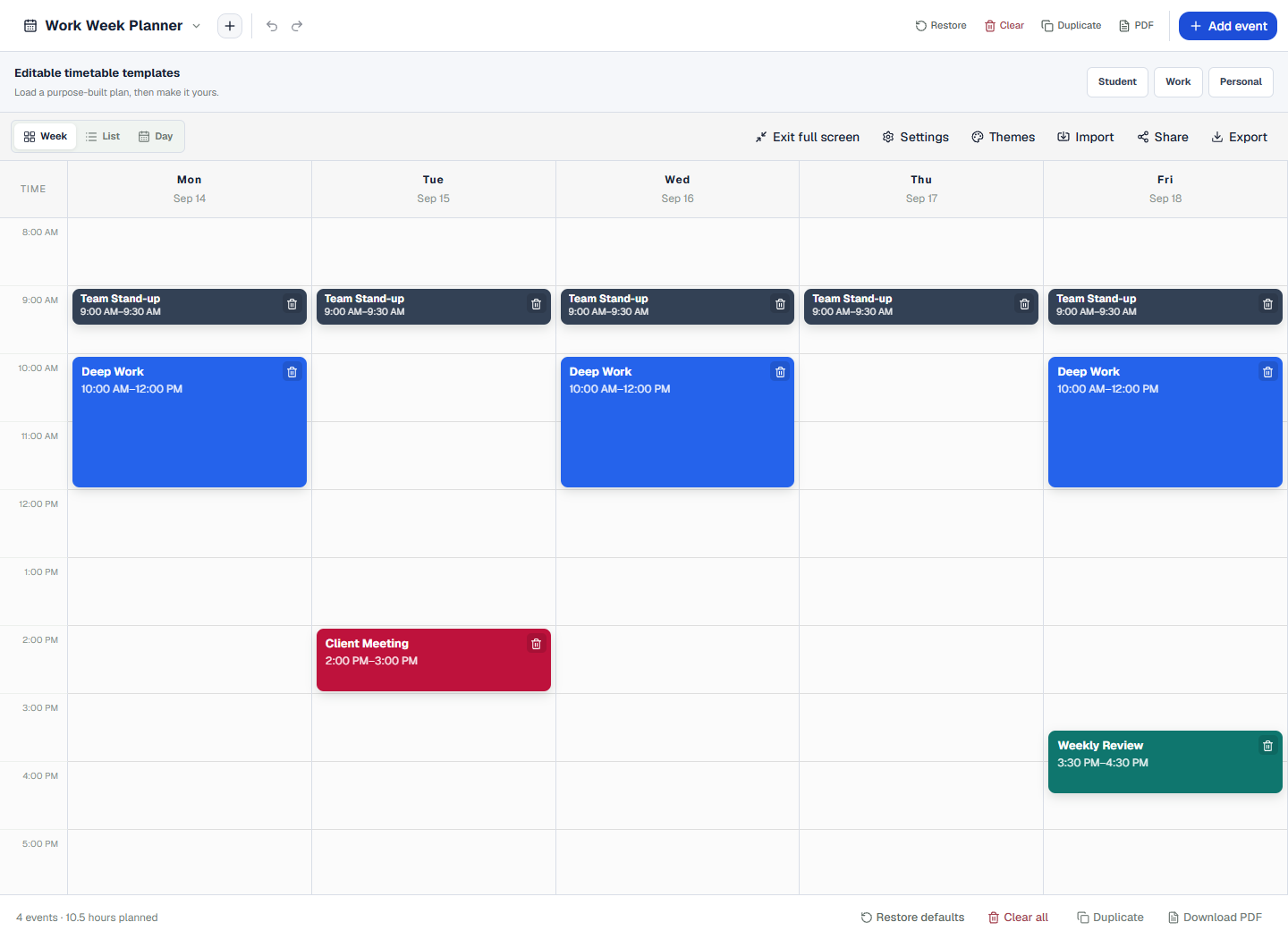
Reserve two or three recurring blocks during the hours when your concentration is strongest. Give each block a type of work rather than a permanent task: writing, analysis, design or planning. The specific outcome can change each week while the protected window remains.

Cluster meetings where possible
A 30-minute meeting can consume more than 30 minutes when it divides a useful focus period. Group meetings into common windows, such as Tuesday and Thursday afternoons, while keeping at least two meeting-light periods in the week.
Name protected blocks clearly and share the pattern with colleagues. A consistent “Focus work” block is easier to respect than an unexplained busy status.
Create an administrative batch
Schedule email, expense reports, approvals and routine follow-up together. One or two batches per day may be necessary in a responsive role; other jobs may need only one. Choose a rhythm that meets expectations without allowing the inbox to define every hour.
Leave capacity for reactive work
If unplanned requests regularly use 20 percent of the week, reserve roughly that amount instead of scheduling 100 percent for planned projects. Open capacity is not wasted. It is what prevents urgent work from displacing every important commitment.
Use theme days carefully
A theme can reduce setup time: Monday for planning, Wednesday for production, Friday for review. Keep themes broad enough to survive real work. A theme is a default direction, not a rule that blocks necessary collaboration.
End with a shutdown block
Reserve 10 to 20 minutes to record unfinished work, choose tomorrow’s first task and close unnecessary tabs. This reduces the mental effort of restarting and makes it less likely that work follows you invisibly into the evening.
Review outcomes, not calendar color
A balanced-looking calendar is not automatically effective. Check whether priority work progressed, important messages were answered in time and the workload felt sustainable. Adjust one pattern at a time so you can tell what helped.