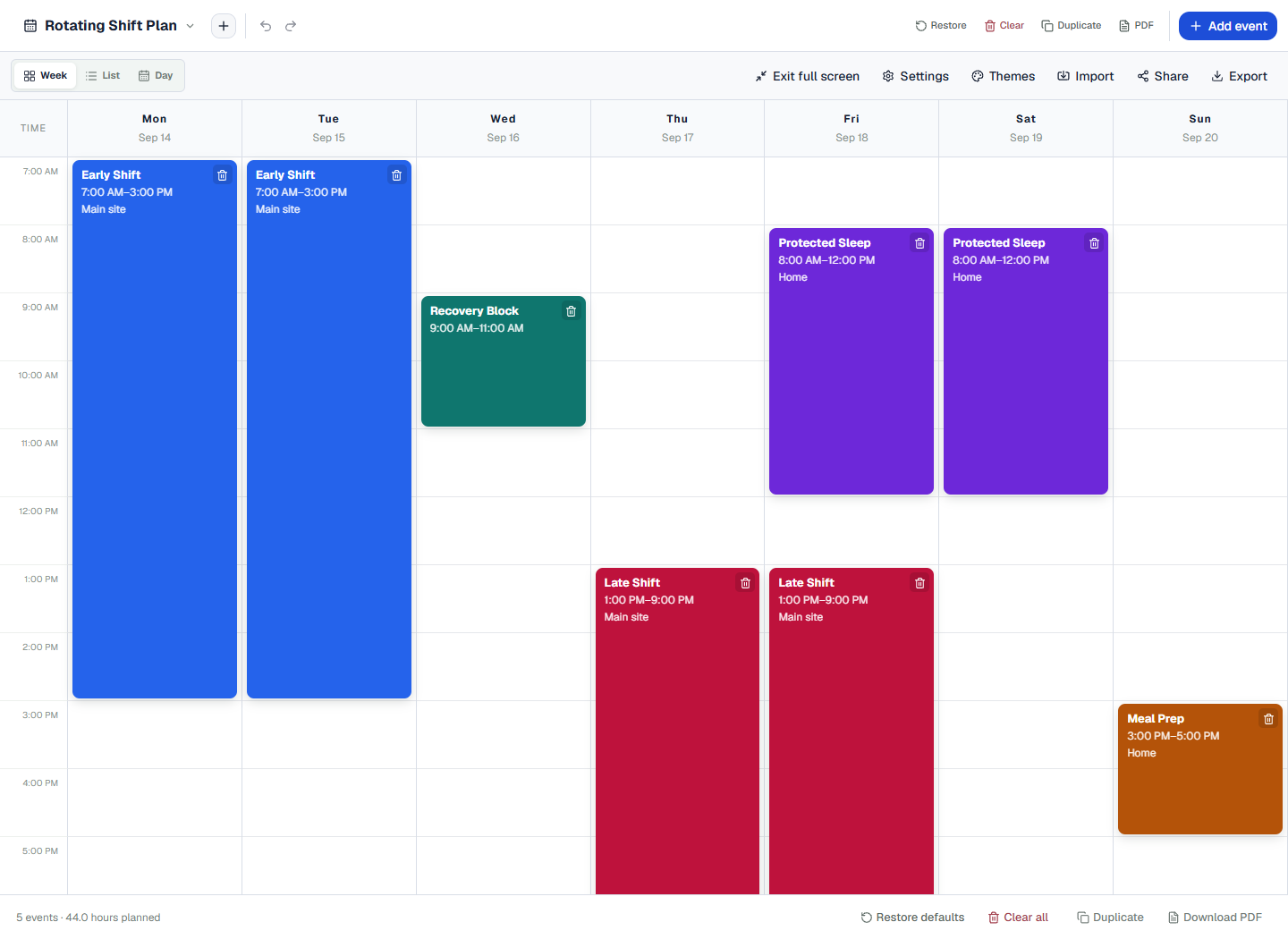

Enter the complete shift pattern
Add every confirmed shift for the full rotation, including overnight work that crosses midnight. Use different schedule names or weeks when the pattern changes. Include handover time if you regularly leave later than the official end.
Add the commute and work preparation
A 7:00 start does not mean the day begins at 7:00. Add the time needed to wake, eat, prepare and travel. After work, include the journey home and a realistic wind-down period before expecting yourself to sleep.

Schedule sleep as a protected commitment
Place the main sleep window on the calendar before errands and social plans. For overnight work, decide when you will sleep after the shift and whether a planned nap before work helps. Keep the room, routine and household expectations as consistent as your rotation allows.
If fatigue affects driving, judgment or your ability to work safely, seek guidance from a qualified health professional or your workplace. A schedule is an organizational tool, not medical advice.
Distinguish work days from recovery days
The first day after a run of night shifts may not be a normal day off. Mark it as recovery and keep expectations modest. Schedule important appointments and demanding personal work on a later day when possible.
Anchor a few repeatable routines
Irregular work becomes easier to navigate when a handful of cues stay stable. Examples include preparing food before the first shift, laying out clothes, taking a short walk after waking or calling family at a predictable point in the rotation.
Plan meals and errands near energy, not clock time
For a night worker, “breakfast” may happen in the afternoon. Label the purpose of the block rather than forcing the schedule into a conventional day. Batch groceries, laundry and appointments where they do not repeatedly cut into sleep.
Use color to reveal the rotation
- One color for day shifts
- One for evening or night shifts
- A neutral color for sleep
- A distinct color for appointments that cannot move
- A light color for flexible recovery or personal time
Share a readable version
Export or print the week for the people affected by the rotation. Include only the information they need: when you are working, sleeping, available and responsible for a handoff. A shared plan reduces repeated questions and accidental interruptions.
Review after one full rotation
Notice where preparation was rushed, sleep was shortened or errands repeatedly landed at the wrong time. Change the supporting blocks rather than assuming the shift itself is the only thing the calendar can show.