
Start with shared commitments
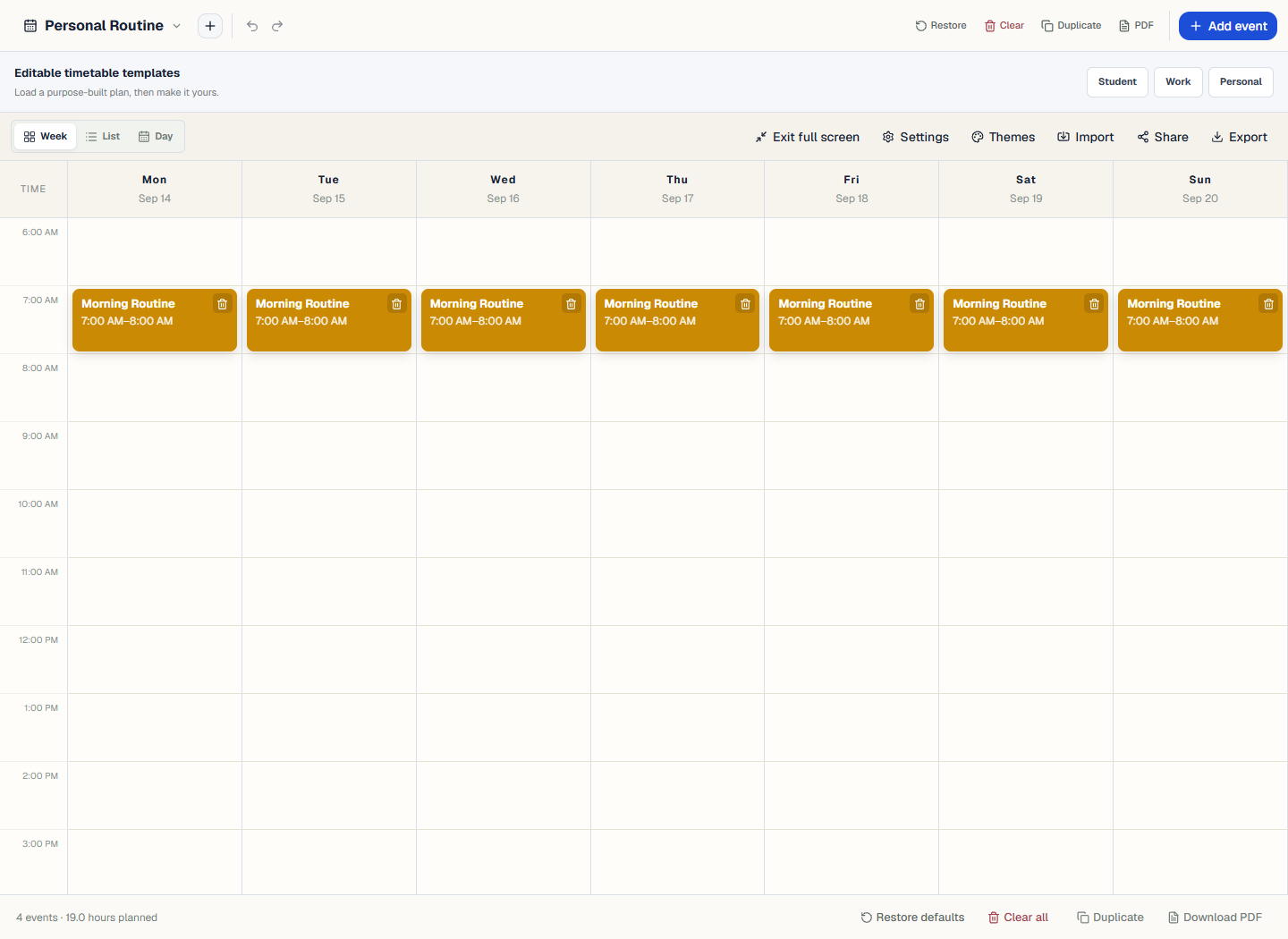
Add school hours, work shifts, childcare, appointments and activities that affect more than one person. A piano lesson also creates a pickup, travel and waiting block. Showing the whole commitment prevents invisible work from being assigned by accident.
Name the person responsible
Do not rely on everyone remembering who volunteered. Include the responsible adult or family member in the event title or notes, especially for transport, forms, equipment and medication. Responsibility should be clear before the busy part of the day begins.
Use a small, consistent color system
Assign a color to each person or to a few useful categories such as school, work, activities and household time. Five clear colors are more useful than a different shade for every event. Include names as well so the plan remains understandable when printed without color.
Add transition details
Include pickup locations, departure times and what needs to travel with the person. “Soccer, 5:00” is incomplete if nobody knows when to leave or where the equipment is. Keep the event short, then use the location or notes field for the essential detail.
A schedule displayed in a public or shared place should not include sensitive medical, school or contact information. Put only what the household needs to coordinate.
Protect the household anchors
Choose a few times that make the week feel stable: shared dinner, a morning preparation routine, homework support or a Sunday planning check. These anchors do not need to happen daily. They simply create predictable points around changing activities.
Let children read the schedule
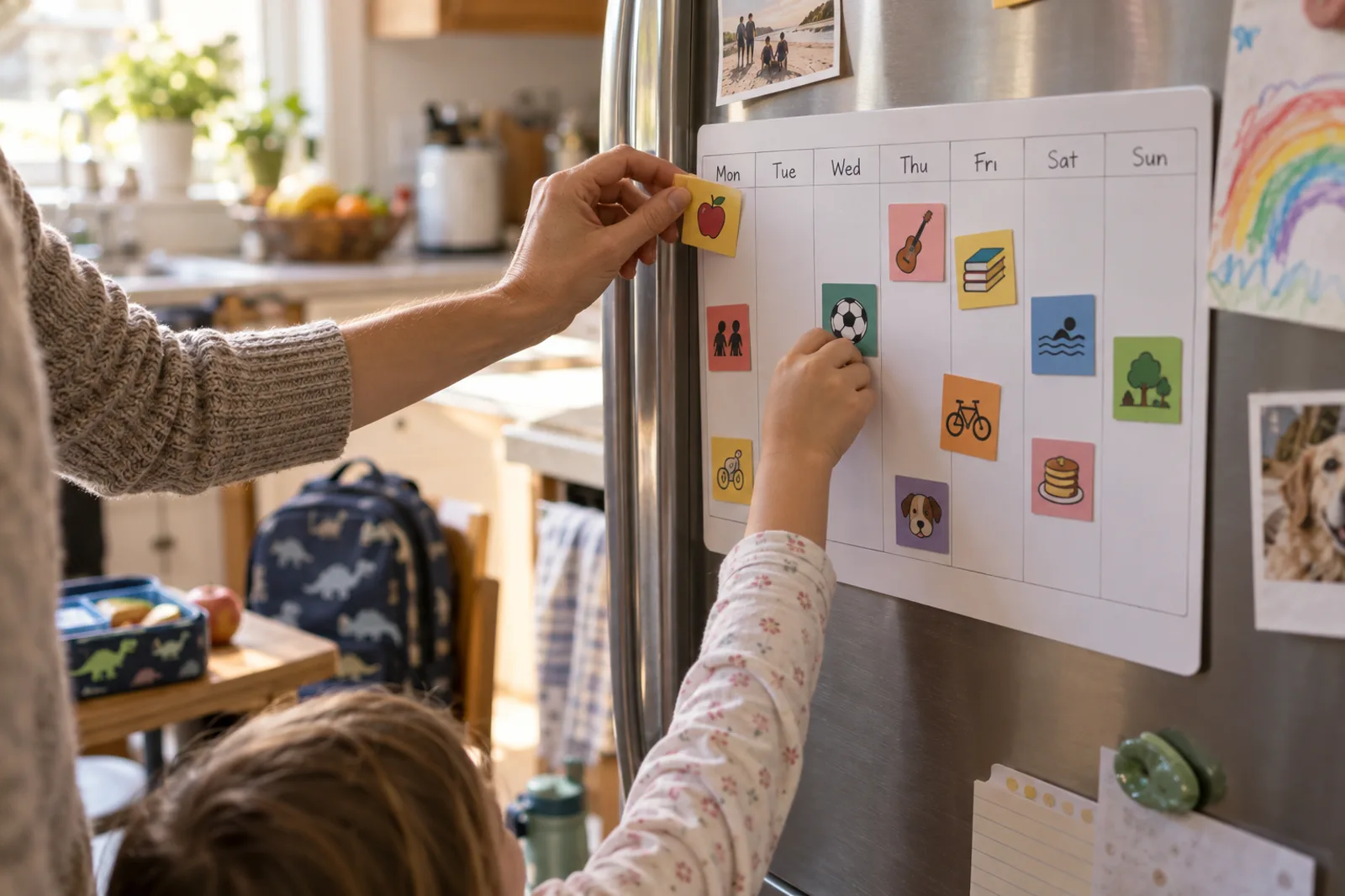
For younger children, pair short labels with recognizable colors or simple printed symbols. Place their events at eye level on a shared copy. Ask them to check tomorrow’s activities and prepare one item themselves, such as a library book or sports bag.
Plan handoffs explicitly
- Who handles drop-off and pickup?
- Where does the handoff happen?
- What must be packed or signed?
- Who is the backup if work runs late?
- When should the other person be notified?
Leave one unscheduled family window
A completely full weekend is fragile. Preserve a block that can become rest, play, household catch-up or time together. If it is repeatedly consumed by chores, reduce commitments or assign the chores elsewhere in the week.
Review the next seven days together
A ten-minute weekly review is usually enough. Confirm unusual events, transport and preparation. Ask what looks difficult. Update the digital schedule, then print or share the current version so the household is not working from several conflicting plans.