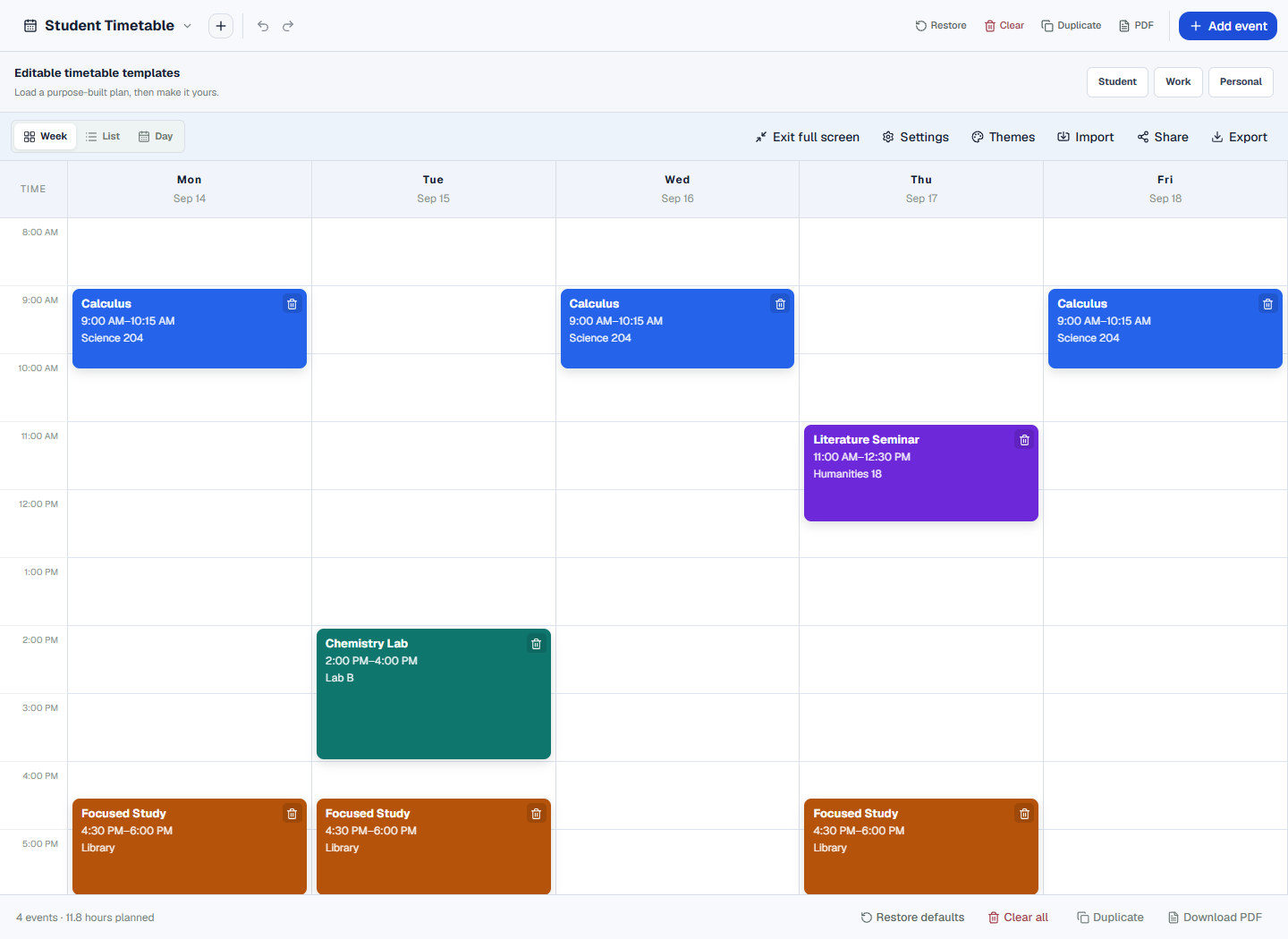

Collect every course component
Record the section number, meeting days, start and end times, room, instructor and registration restrictions for every option. Include lectures, discussions, labs, studios and exams that meet separately. Keep at least one alternative for required courses until registration is complete.
A lecture and lab can belong to the same course but meet on different days. Add every required component before comparing schedules.
Add commitments outside class
Place work shifts, athletics, commuting, recurring appointments and family responsibilities on the grid before selecting sections. A class can fit on paper and still make it impossible to arrive at work on time.
Measure travel instead of guessing
Check the actual route between buildings. Allow time for stairs, crowded hallways, parking, locking a bicycle or waiting for a shuttle. If two classes are on different campuses, build a conservative transition block and test the trip before the term begins.

Schedule study near the class
Add at least one short review block within a day of each demanding lecture. Use longer sessions for problem sets, papers and exam preparation. The goal is not to predict every assignment; it is to reserve enough capacity before deadlines begin competing.
Use gaps deliberately
A 60- to 90-minute gap can be useful if you have a reliable place to work. A 25-minute gap may only cover walking, food and preparation. Label hours of unscheduled campus time are not automatically productive, so decide what each gap is for.
Compare schedule shapes, not just courses
- Number of early starts and late finishes
- Total commuting days
- Back-to-back classes without meals
- Long idle gaps with nowhere useful to work
- Whether difficult courses are concentrated on one day
- Room for work shifts and recovery
Build a backup before registration
Popular sections fill quickly. Create a second complete version using alternate sections and confirm that it still works with travel and employment. Keep course registration numbers beside each option so you can switch quickly without rebuilding the week under pressure.
Choose the schedule you can sustain
A compact timetable may reduce commuting, while a spread-out schedule may create better study periods. Neither is universally better. Choose based on your travel, energy, work obligations and access to quiet study space—not on how tidy the calendar looks.